Let's be honest: missing payroll is one of those business emergencies that hits when you're already stretched thin.
If your business misses payroll, employees walk away without their check. Your company could face wage claims, state penalties, lost trust, and potentially serious payroll-tax headaches. The exact fallout? It depends on what went wrong and where your employees work.
Here's what you need to do right now: confirm whether employees actually didn't get paid (or if it's just a delayed direct deposit), contact your payroll provider and bank, get clarity on what's owed, and arrange payment as fast as you can legally.
One Critical Distinction
A seven-day recovery plan does not mean you have a seven-day legal grace period. Your employees are owed their wages on the required payday. The clock starts ticking the day the money was supposed to hit their accounts.
What Does "Missing Payroll" Actually Mean?
In the panic of a cash crunch, the term gets thrown around loosely. Three different situations, three different responses:
- You missed the payroll provider's submission deadline: employees might still get paid on time
- Your bank couldn't cover the payroll debit: employees might get paid late
- You missed a payroll-tax deposit deadline: employees get paid, but the employer tax deposit is late
These aren't the same problem.
| Situation | What actually happens | First move |
|---|---|---|
| Payroll processing cutoff missed | Direct deposits may be delayed unless you use an alternative payment method | Hit your payroll provider, confirm expedited or manual options |
| Employees not paid on the required payday | Unpaid wages, potential wage claims, state penalties | Calculate what's owed, get legal guidance, pay them |
| Payroll-tax deposit deadline missed | Separate IRS penalties and interest | Verify tax liabilities and when deposits are due |
| Repeated payroll delays | Eroded trust, retention bleeding, regulatory attention | Fix the funding gap and rebuild cash controls |
The difference between a processing failure and a wage violation: it's about whether employees actually receive their wages by the required date.
A Real-World Example
Imagine you run a team of 12 and your payroll day is Wednesday. You're sitting Monday morning and the balance sheet looks healthy:
| Cash movement | When it hits | Amount |
|---|---|---|
| Bank balance | Monday morning | +$58,000 |
| Rent and committed payments | Tuesday | −$9,000 |
| Net employee wages | Wednesday | −$42,000 |
| Payroll-related tax funding | Wednesday | −$12,000 |
| Customer payment | Friday | +$35,000 |
Here's where it gets tricky:
- Cash available on Tuesday after rent clears: $49,000
- What the payroll provider needs on Wednesday: $54,000 ($42k wages + $12k taxes)
- The gap: $5,000
That Friday customer payment will clear your balance on Friday, but it cannot fund Wednesday's payroll.
A profitable month is not the same thing as having cash on Wednesday.
If You Know Payroll Isn't Cleared, Move FAST
When payday is today, or you already know payroll will fail, there's no time for a week of financial analysis. Here's your immediate checklist:
1. Figure Out Exactly Who Is Unpaid
Don't assume because one bank transfer failed that everyone's unpaid. Or don't assume it's "good" because your payroll dashboard says the batch submitted.
Pull the payroll register and get specific:
- The legally required payday date
- Which employees are affected
- Gross wages, including any overtime
- What's being withheld (taxes, benefits, etc.)
- What's already processed
- What's bounced or returned
2. Talk to Your Payroll Provider and Bank
Call your payroll provider: "Can this still run on time? What are your options for expedited processing or manual payments?"
Talk to your bank about the failed transfer, available funds, and whether your credit line or overdraft can cover this.
A faster processing option won't help if the cash isn't there.
3. Pull In the Right People
Depending on your team, you'll need:
| Role | Why they're here |
|---|---|
| Founder / CEO | Own the decision and financing |
| Controller or finance lead | Verify what's actually in the bank, what's owed, what's committed |
| Payroll admin | Reconcile at the employee level |
| Bank / payroll provider | Confirm payment timing and methods |
| Employment counsel | What are the wage-payment rules in my state? |
| Payroll-tax adviser | When are the tax deposits actually due? |
In a small business, one person might wear all these hats. The key: nothing gets left unassigned.
4. Tell Your Team
Employees shouldn't discover they weren't paid when they check their bank accounts.
When you know the delay is real, communicate it clearly and immediately:
"We've identified an issue with this payroll run. We're working with our payroll provider and bank to resolve it. We understand the impact this has on you and will share a verified update by [time], including what we can confirm about when you'll be paid."
Don't ask employees to waive earned wages or their statutory rights.
Keep a record of everything: notifications, payment confirmations, employee questions and responses.
Is It Illegal to Miss Payroll?
Short answer: Missing a legally required payday can be a violation of federal or state law.
Long answer: It depends on the employees, the wages involved, where they work, and the circumstances.
Federal Requirements
The Fair Labor Standards Act (FLSA) requires that wages due for a pay period be paid on the regular payday.
However, the FLSA's collection provisions are narrower than you might expect. They primarily cover minimum wage and overtime for covered workers. State laws often govern the rest.
For founders with teams across multiple states? Read the local rules.
State Rules Vary Wildly
Take California and Texas for example:
California has some of the harshest penalties in the country. Under Labor Code Section 210, a regular late-payment violation can trigger:
- $100 per employee for the first offense
- $200 per employee for subsequent violations, plus 25% of the unpaid wages
Texas, by contrast, takes a more enforcement-light approach. The Texas Workforce Commission does require on-time payments, but their guidance says they generally won't impose administrative penalties for a first offense.
That doesn't mean late payment is fine in Texas. It means the penalty system is different.
Here's What Most Founders Don't Know
Final-paycheck rules are completely different.
In California, Labor Code Section 203 creates "waiting-time penalties" when an employer willfully fails to pay final wages after an employee quits or is fired. Those penalties can be up to 30 days of wages.
This isn't an automatic 30-day grace period for everyone. It applies only to specific termination circumstances.
The Real Consequences
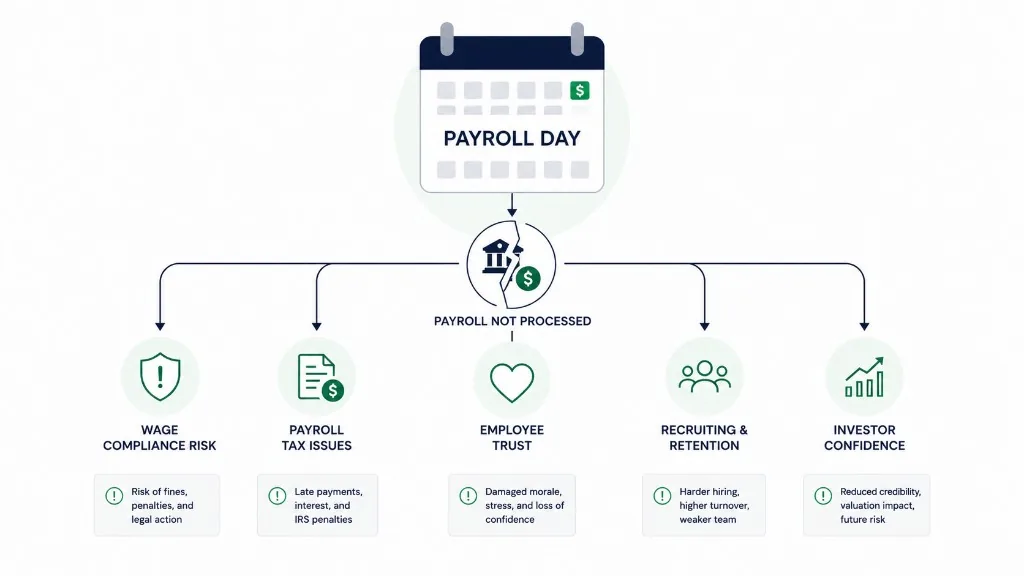
When you miss payroll, the fallout goes way beyond the employees' bank accounts.
1. Wage Claims and Back Pay
Employees who don't get paid by their required payday have rights. They can file a wage claim, and you could be on the hook for back pay plus penalties.
One missed payroll doesn't mean "one and done." If the problem repeats or persists, the consequences escalate quickly.
2. Tax Exposure That's Separate
Important: Payroll taxes and employee wages are two separate obligations.
If your employees aren't paid, that's a state wage-law issue.
If your tax deposit to the IRS is late, that's a federal tax issue with separate penalties.
| How late | Typical IRS penalty |
|---|---|
| 1–5 days late | 2% |
| 6–15 days late | 5% |
| More than 15 days late | 10% |
| More than 10 days after the first IRS notice, or on an immediate-demand notice | 15% |
These percentages don't stack. But interest accumulates. And if a deposit stays unpaid after an IRS notice, it rises to 15%. In serious cases, the IRS can also pursue "trust fund recovery" against responsible individuals.
Never divert payroll taxes to fund payroll. That's a separate legal problem from a cash-flow problem.
3. The Trust Breaks (And May Not Be Fixed)
Employees shouldn't wake up to a surprise. Many live paycheck to paycheck. A delayed check doesn't just inconvenience them. It makes them question whether they should stay.
You're shifting your company's liquidity problem onto people who have already done the work.
I've been on both sides. As an employee, discovering a "we're waiting on the bank, but we'll have it on Friday" message... that anxiety is real. It's different from the CEO's panic when the balance sheet doesn't match reality.
Even if you eventually pay them, that trust is gone. They're more likely to leave or less likely to believe you when you say "we're on a tight schedule."
Do the Math: Calculate Your Actual Payroll Cash Shortfall
This is where many founders get tripped up.
You look at your month-end balance and think, "I have enough cash." But timing is everything.
Here's a step-by-step breakdown:
Step 1: Cash available before payroll
$58,000 (Monday) − $9,000 (Tuesday rent) = $49,000
Step 2: What payroll actually costs (cash-wise)
$42,000 (net wages) + $12,000 (tax funding) = $54,000
Step 3: The gap
$54,000 − $49,000 = $5,000 shortfall
Step 4: Don't count Friday's money
That $35,000 customer payment arriving on Friday? It doesn't help you fund Wednesday's payroll.
You need to make the payment on Wednesday. Friday's money comes too late.
Covering Payroll When You're Cash-Strapped
Once you know the gap and the deadline, you have a few levers to pull. Here's what to evaluate:
| Option | Ask yourself |
|---|---|
| Collect overdue receivables | Can I call the customer now and get a confirmed payment date? |
| Request early payment | Is this customer okay to pay before the due date? |
| Cut discretionary spending | Can I pause non-essential payments without legal/contractual issues? |
| Use an existing credit line | Is it available? Does it cover the full amount before payroll? |
| Invoice financing | What are the fees? How fast does funding arrive? |
| Personal/investor funds | Can I or the investors cover this immediately without major risk? |
Hard truth: A customer promise is not confirmed cash. Don't plan payroll around "they said they'd pay."
Harder truth: Expensive short-term financing can turn a one-time crisis into a permanent cash hole.
Important: If you can't fund full payroll, don't decide alone on partial payments. Talk to an employment lawyer. What's legal to pay now varies by state, and skipping employees can create worse penalties than paying them all.
The 7-Day Recovery Plan
Here's a practical framework for when you're in the middle of a payroll emergency:
Day 0: Triage and Immediate Action
This is the most critical day.
Confirm: Did employees actually not get paid?
- If yes: contact your legal team immediately
- If no: the problem might be the direct deposit cutoff, not the cash
Get three confirmations:
- Your payroll provider
- Your bank
- Employment counsel for your state
Tell employees today if there's going to be a delay.
Day 1: Find the Cash
Stop living off accruals and start counting cleared cash.
- What's actually in the bank right now?
- What receivables can I confirm will collect by payroll date?
- What credit facility can I access and will it clear in time?
Cut non-essential spending immediately.
Keep paying wages. Statutory obligations don't go away.
Day 2: Fix What's Due
Confirm what employees received (or didn't).
Check whether payroll taxes have been deposited, and what's still outstanding.
Save everything: payment confirmations, bank statements, emails, texts.
Day 3: Build the Next 14 Days
Stop guessing. Create a daily cash forecast, not a weekly one.
Include:
- All confirmed incoming payments with actual dates
- All committed outgoing payments
- Payroll dates and full funding requirements (wages + taxes)
- Rent, loan payments, insurance, vendor contracts
Find the lowest point on your cash curve. That's when you're most at risk.
Day 4: Figure Out What Went Wrong
If the forecast doesn't match reality, ask why:
- Major customer still hasn't paid?
- An expense you thought was "later" came due early?
- Did we forget a payroll cycle?
- A tax due date you didn't account for?
Adjust the forecast and document what you'll do differently next time.
Day 5: Set a Payroll Buffer
Establish a minimum cash reserve for payroll.
A good rule of thumb: enough cash to cover 1-2 complete payroll runs including taxes.
This isn't a lifeboat fund. It's a control to prevent emergencies before they happen.
Set a check-in: how many days before the next payroll do you want to be alerted?
Day 6: Go Rolling
Move to a 13-week rolling cash forecast. This is your new normal.
Keep it simple: cash in, cash out, when it hits.
Review it weekly and when major payment dates change.
Grab a free template here if you need a starting point.
Day 7: Fix the System
Every emergency is a system failure in disguise.
Document what broke:
- Did we not check the forecast before payroll approval?
- Did we ignore an alert that we were low on cash?
- Did we not have a person assigned to watch cash levels?
Implement fixes:
- Named owner for payroll approval
- Daily cash review before the payroll deadline
- Early warning system for cash below the buffer
- Payroll calendar that includes all payroll dates (not just the first day of the month)
The One Rule
Nobody discovers a cash shortage on payday morning.
If your daily forecast is below the threshold required to cover an upcoming payroll, the founder and finance owner get notified immediately.
How to Stop This From Happening Again
Most payroll emergencies are preventable. The root cause is usually the same: confusing accounting profit with cash reality.
Here's what to build into your routine:
1. Forecast on Real Dates, Not Dates on Your Calendar
Don't plan payroll for "the end of this month." Plan for the exact Wednesday when your payroll provider needs the funds.
Track each incoming payment's actual expected settlement date, not its invoice due date.
2. Include the Full Funding Requirement
You're not funding "the payroll." You're funding:
- Net wages
- Employee withholdings (federal/state taxes, Social Security, Medicare)
- Employer payroll taxes
- Benefits (health, 401(k), etc.)
All on their actual due dates.
3. Watch the Lowest Point, Not Just Month-End
A company can have a great month-end balance and still drown in the middle of the month.
Watch your daily cash position, especially in the 7 days before each payroll run.
If the projected balance drops below your operating floor, take action now.
4. Stress-Test Your Assumptions
What if:
- Your biggest client pays 10 days late?
- Two major customers delay payment at the same time?
- You have an unexpected $20k repair bill?
Model these scenarios. You might find you have a $5k gap that would otherwise go unnoticed.
This is where tools like Zensus come in. We build cash flow forecasts around when cash is due to move, giving founders and finance teams the visibility they need to make decisions before a crisis hits.
The goal isn't to predict the future. It's to reveal funding gaps early enough to fix them.
The Bottom Line
Missing payroll isn't just a bookkeeping error.
It means your employees didn't get money they've already earned.
It can land you in legal and tax trouble.
It can destroy trust in your leadership.
If you know payroll is at risk, don't wait.
- Verify what you actually owe
- Get in touch with the people who can help (provider, bank, counsel)
- Tell your team
- Make lawful payment
Then fix the hole in your cash management.
The difference between surviving and recovering?
Not hoping your bank balance looks okay on Friday.
Knowing on Monday that Friday is going to be a problem.
Learn how to forecast your cash accurately with Zensus so you can see payroll shortfalls before they become emergencies.
Disclaimer: This article is for educational purposes only and does not constitute legal, tax, or financial advice. Payroll, wage, and tax rules vary by state and circumstance. If you have questions about your specific situation, consult with a qualified employment and tax professional.
Related guides:
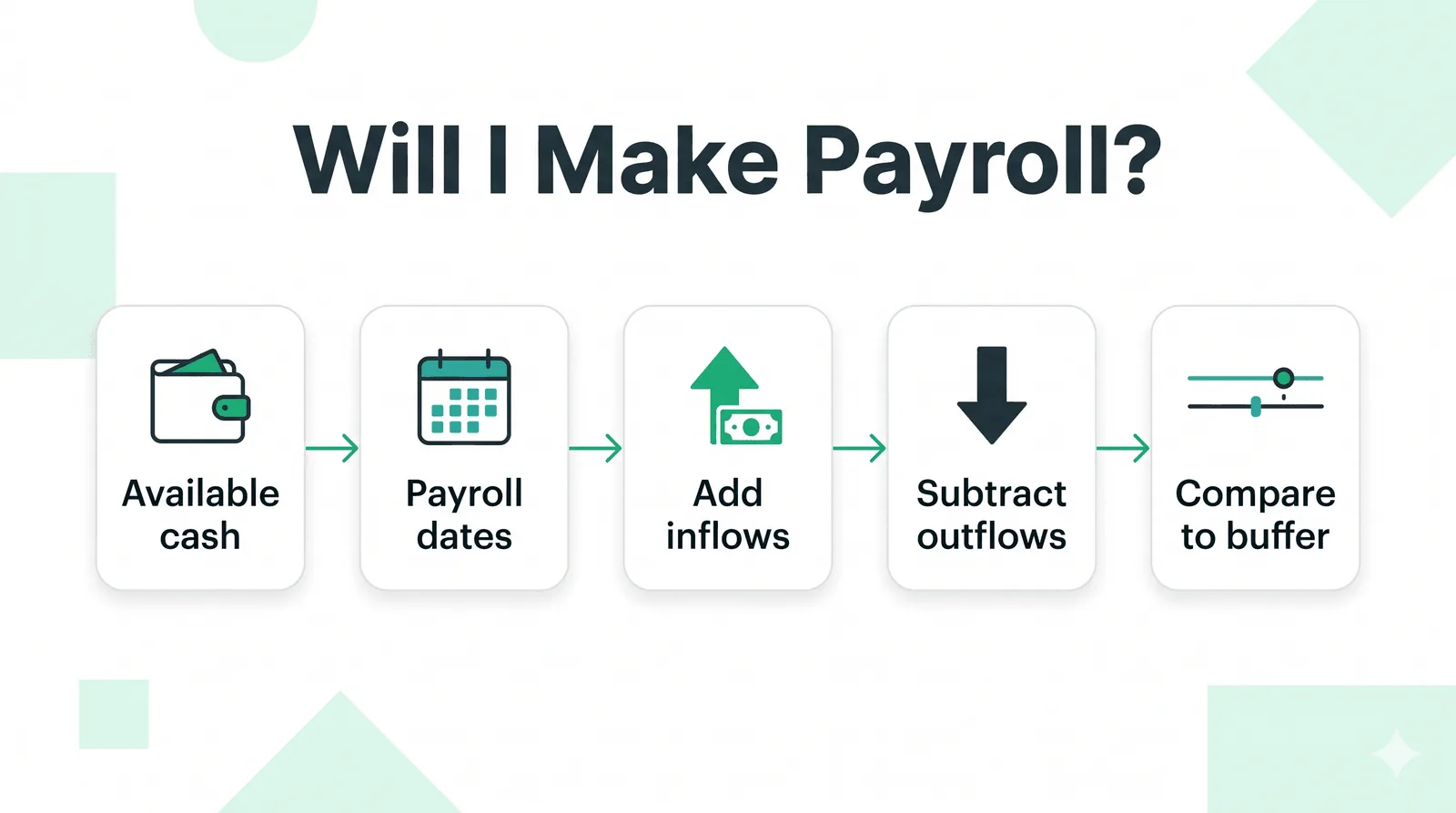
- Will I make payroll?: checking each payroll date against your cash, weeks ahead.
- Cash flow early warning system: setting a cash floor and alerts.
- What is a 13-week cash flow forecast?: the rolling weekly model.
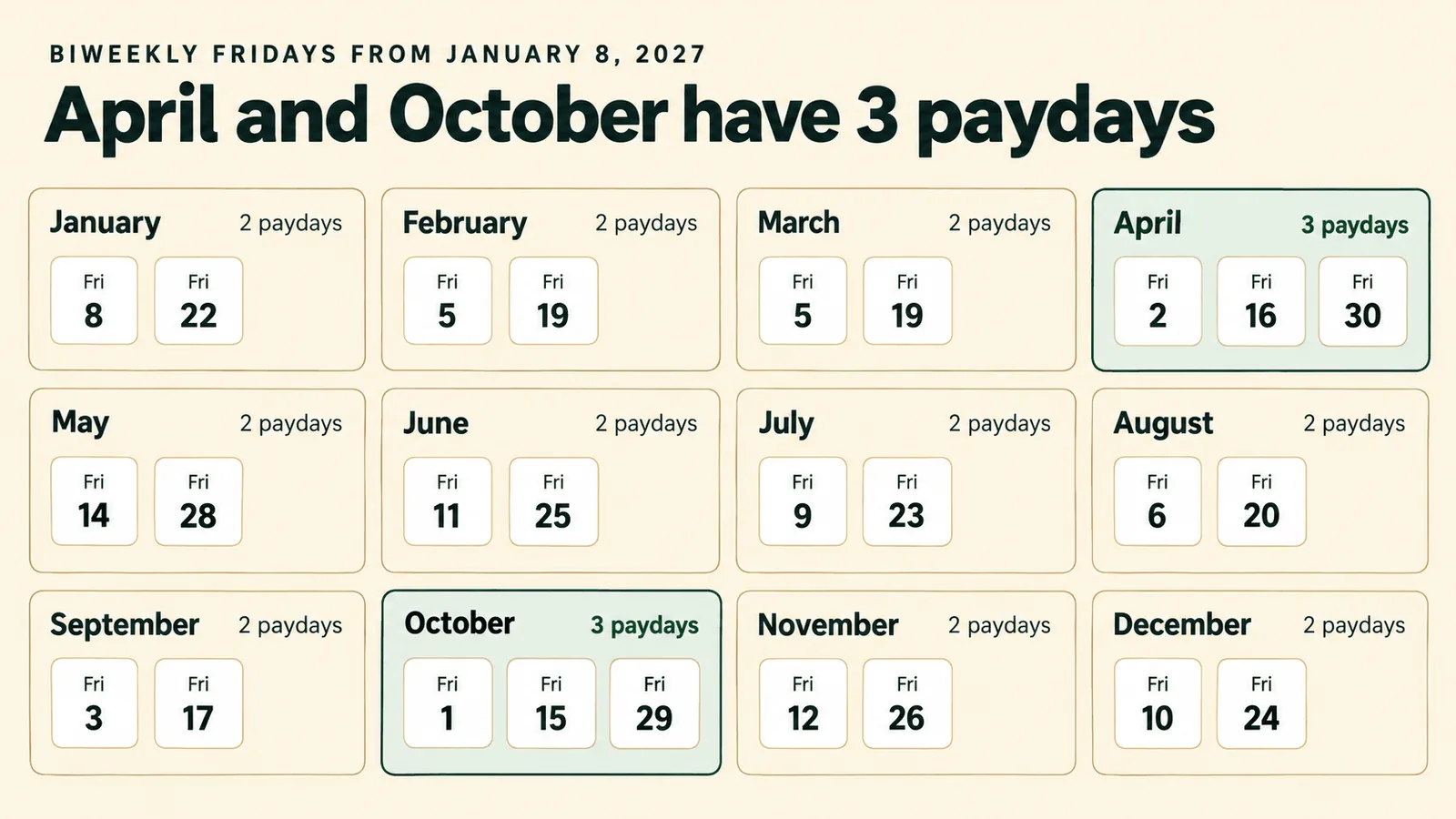
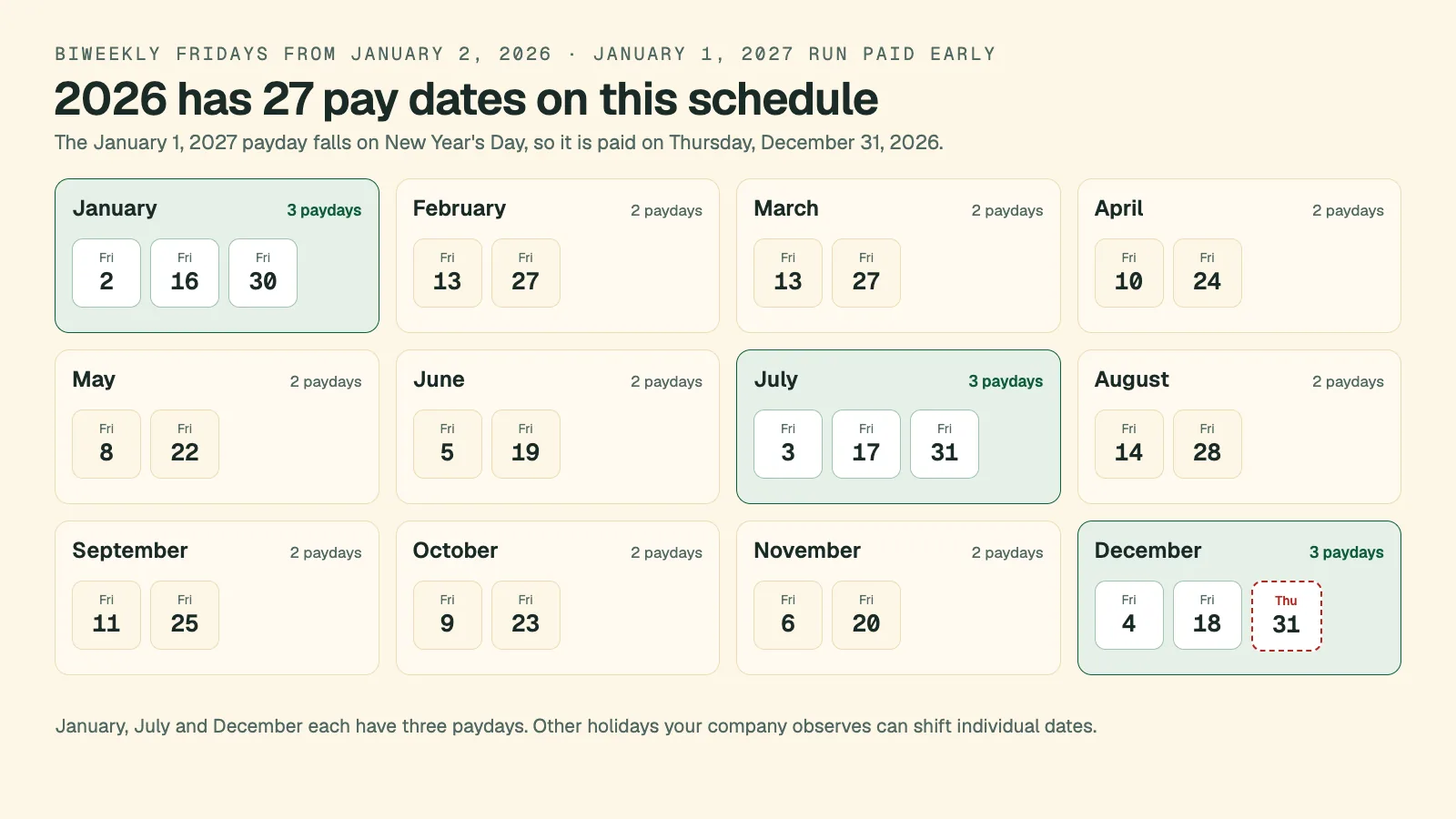
- 27 pay periods in 2026 or 2027?: the year with an extra payroll run.